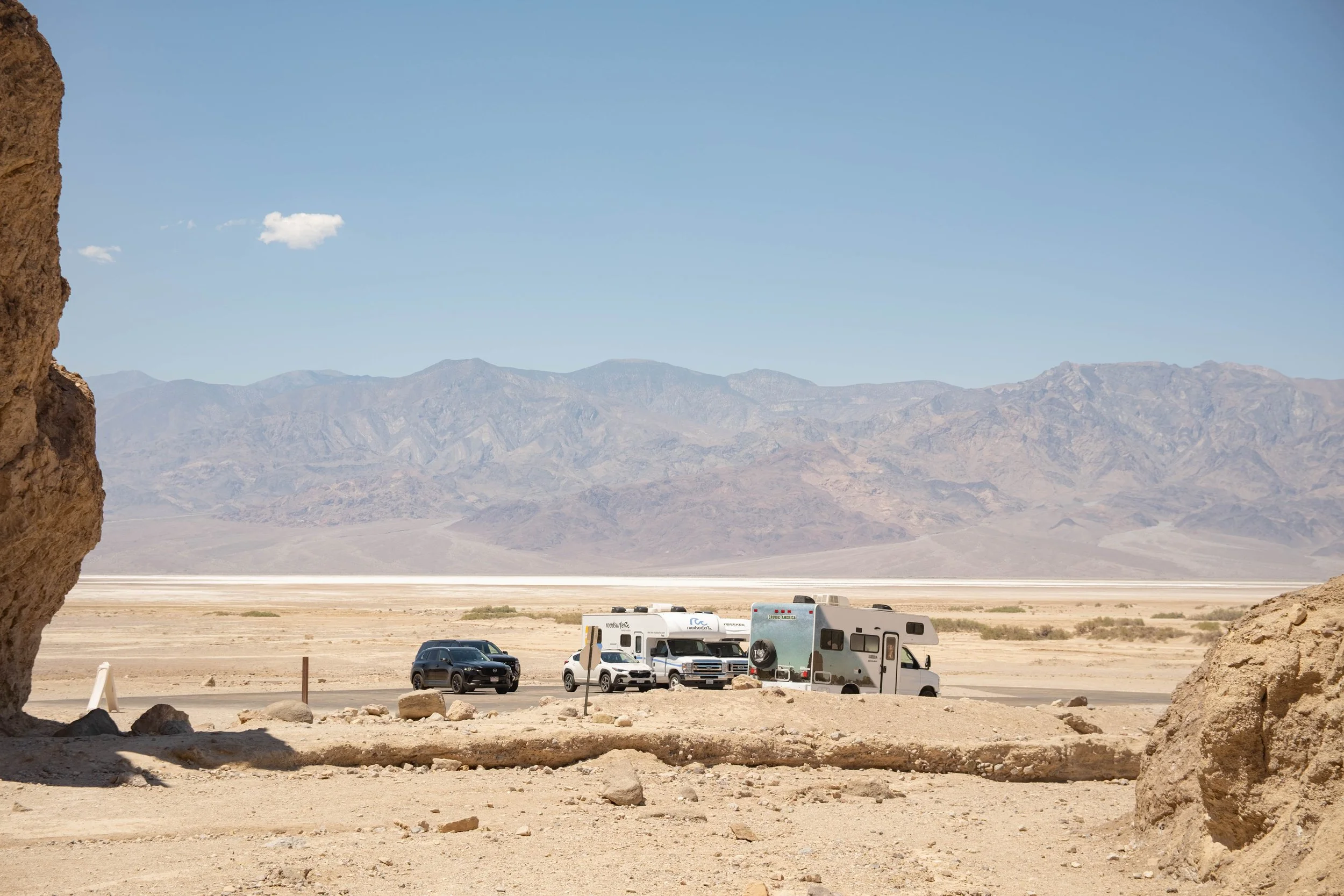
There are certain places where, upon arriving, you immediately begin questioning the chain of decisions that brought you there.
Death Valley in the summer is one of those places.
The temperature outside my rental RV was 116 degrees Fahrenheit (47°C for basically everyone else on Earth).
Not the heat index. Not the temperature of the pavement. Not some exaggerated number on a roadside sign designed to scare tourists.
One hundred and sixteen degrees.
And there I was, voluntarily driving deeper into it.
In hindsight, visiting the hottest place in America in the heat of summer probably wasn't the smartest decision I've ever made. In my defense, though, Death Valley was sitting directly between Joshua Tree and Las Vegas on my route through the American desert.
And I had never been there.
That was apparently enough justification.
The Road Into Death Valley
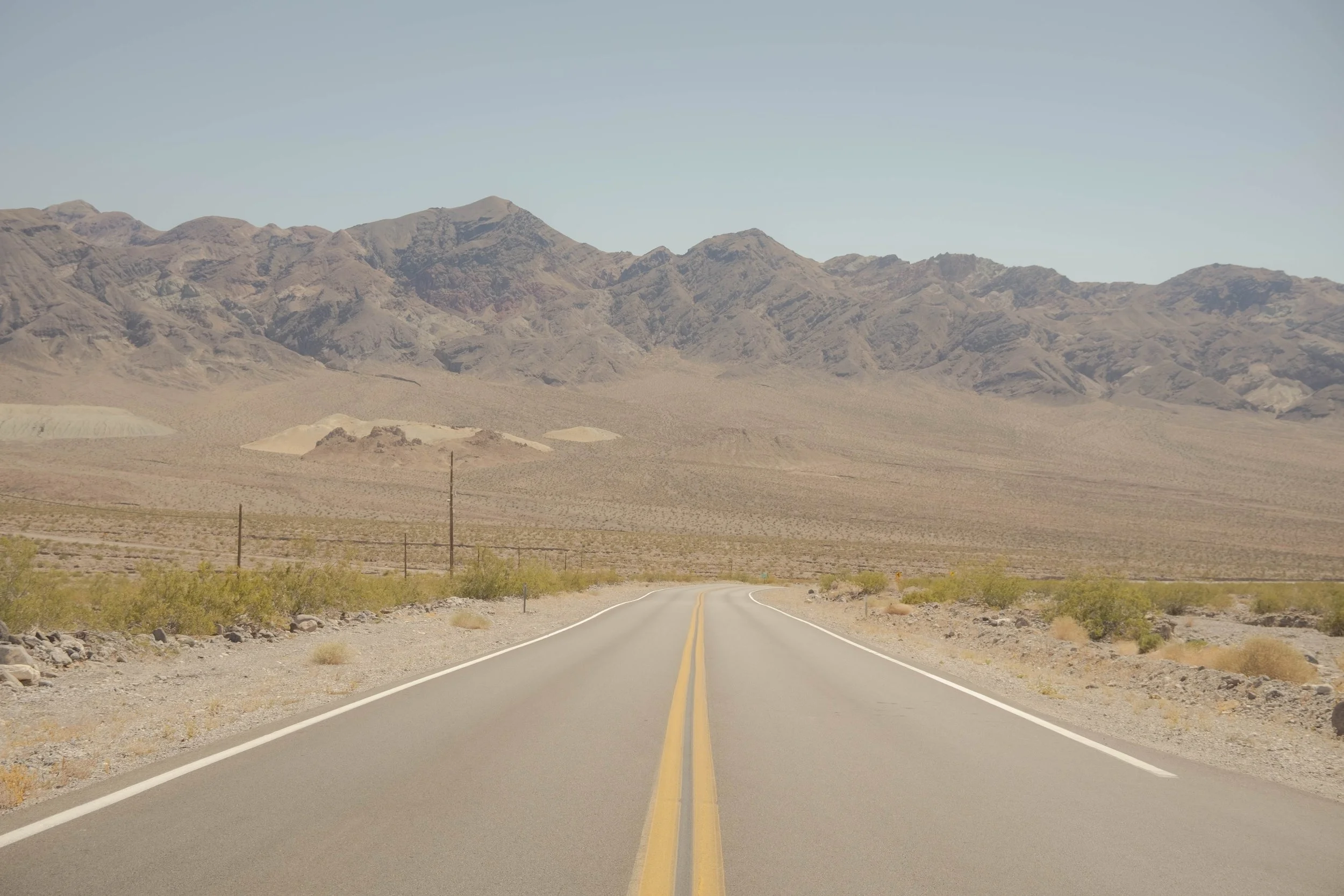
There's something ominous about the drive into Death Valley.
The landscape slowly empties.
Towns disappear. Gas stations become increasingly important. Vegetation becomes sparse. Mountains rise around enormous stretches of nothing.
Eventually, you start passing signs warning you about extreme heat.
Then your phone loses service.
Then the temperature keeps climbing.
At some point you realize that this isn't a theme park version of the desert. There are no guardrails around the experience.
This place can actually kill you if you’re not smart about it.
That realization makes Death Valley feel different from almost every other national park I've visited.
I had started the morning in Joshua Tree, where I watched the sun come up from Keys View before getting back into the RV and continuing north.
By the time I reached Death Valley, the desert had transformed.
Joshua Tree felt rugged and alive. Death Valley felt extraterrestrial.
Huge mountains surrounded enormous valleys of rock, salt and sand. Heat shimmered above the pavement like a cartoon. The road stretched toward the horizon until it seemingly disappeared or you thought you were hallucinating.
And my dashboard thermometer just kept going up.
Eventually:
116°F.
Excellent planning, Frank.
What 116 Degrees Actually Feels Like
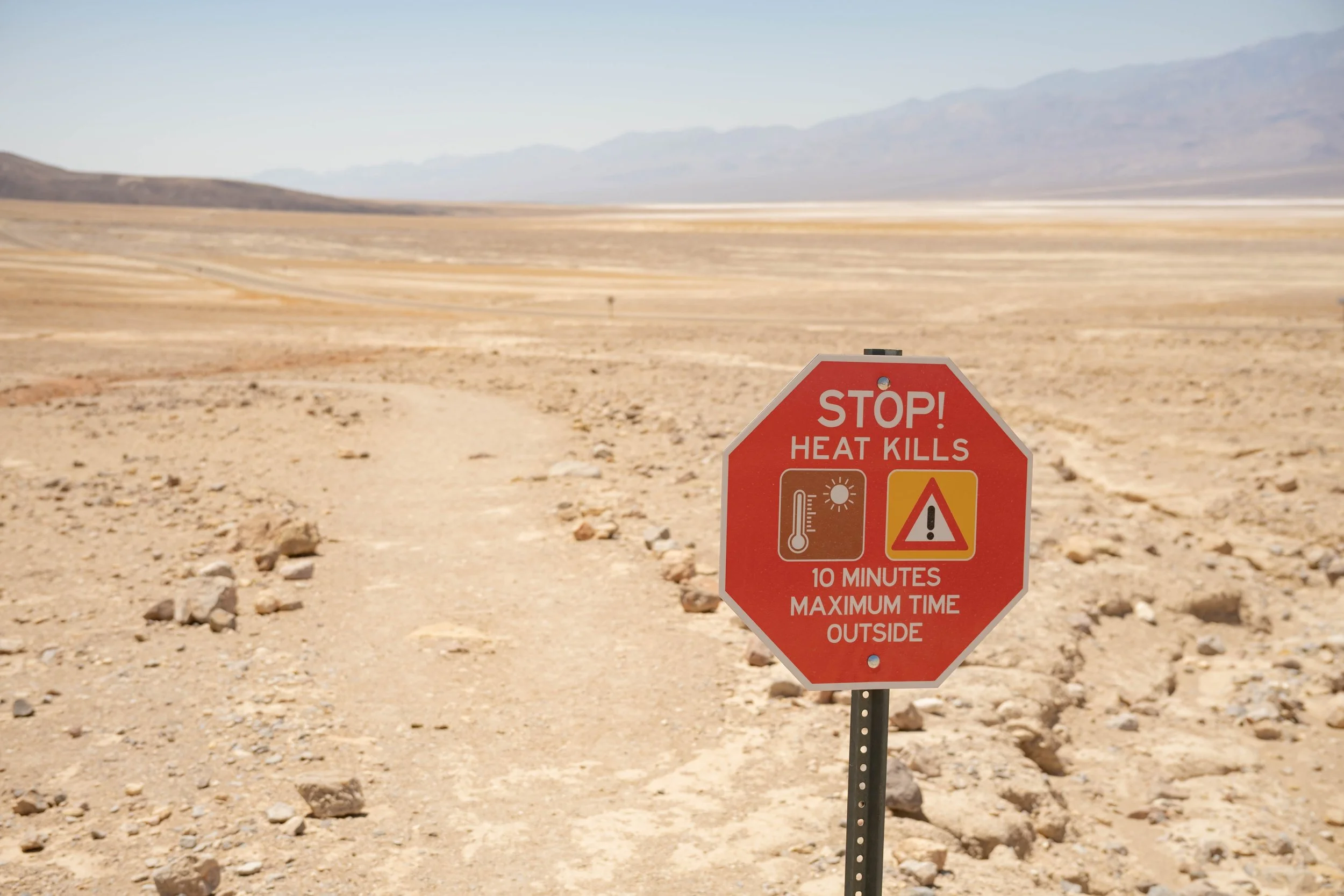
I've experienced hot weather before. New York is no stranger to hot and humid weather, with the heat index occasionally pushing into the triple digits.
This was different.
Opening the door of the RV felt like opening an industrial oven and you were the pizza.
The heat didn't just surround you. It hit you. Like a freight train.
There was no refreshing breeze because the breeze was also 116 degrees. Standing in the shade helped only in the technical sense that direct sunlight was somehow even worse.
And almost immediately, your brain begins performing calculations it normally doesn't have to make.
How far am I from the RV?
How much water do I have?
How long have I been outside?
Is my phone overheating?
Am I overheating?
Death Valley forces you to respect it very quickly.
I wasn't hiking miles into the backcountry. I wasn't attempting some heroic desert expedition. Most of my exploration consisted of driving somewhere, getting out, exploring for a short period, taking photographs and getting back into the air conditioning.
And that was enough.
Because during summer, even sightseeing becomes something you have to think about.
Badwater Basin
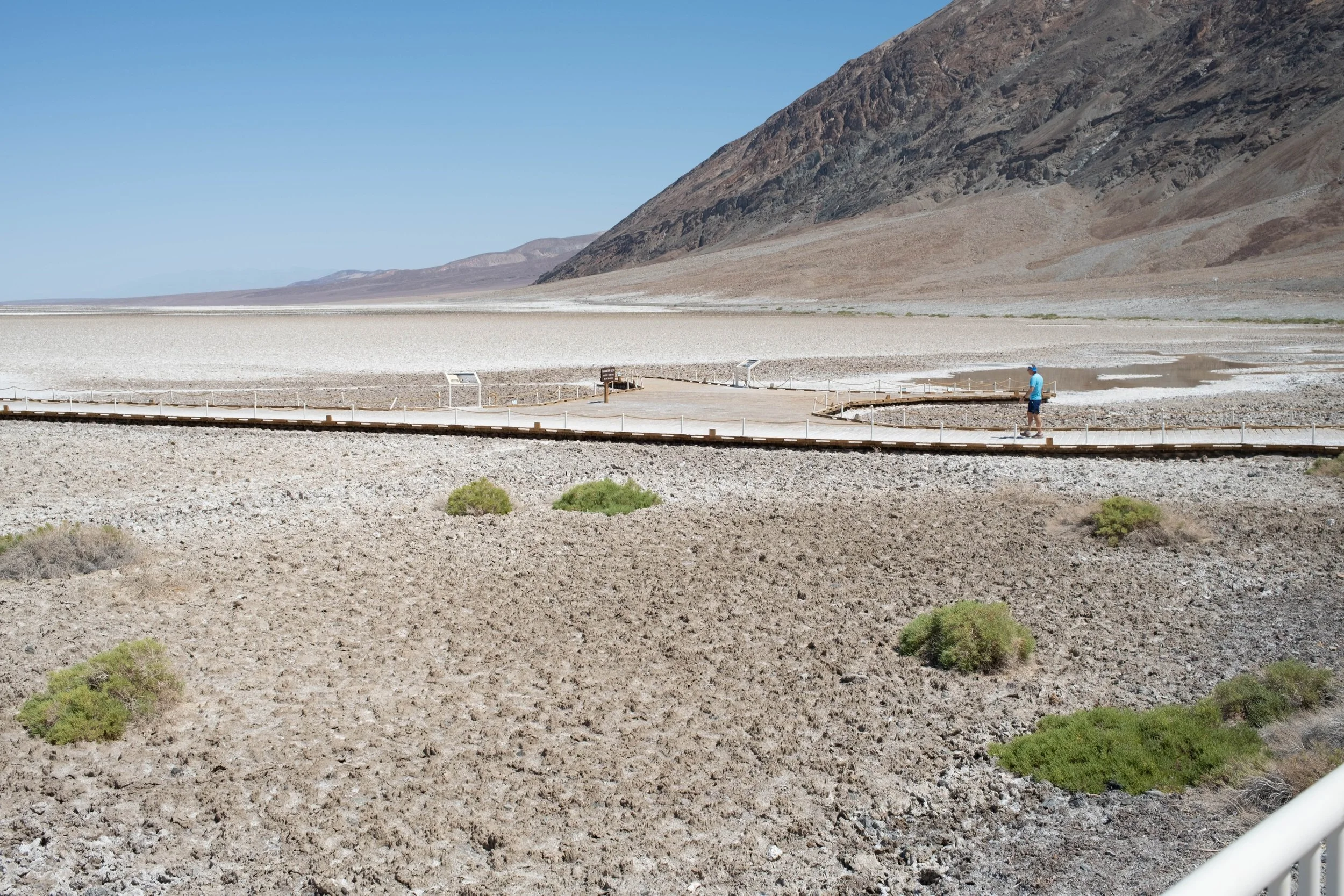
Then I arrived at Badwater Basin.
At 282 feet below sea level, it's the lowest point in North America.
Standing there is bizarre.
You look across an enormous white salt flat toward mountains rising thousands of feet into the sky. Somewhere high above the parking area, a small sign on the mountainside marks sea level.
It puts the landscape into perspective.
You're standing at the bottom of a giant geological bowl.
Unfortunately, that bowl is also exceptionally good at collecting heat.
Walking onto the salt flats in the middle of a summer afternoon was probably the moment when the absurdity of this trip peaked.
There were other people out there, which was reassuring.
It was also concerning because apparently there were multiple doofuses instead of just myself as per usual.
Nobody stayed particularly long.
You'd walk out, look around, take in this completely alien landscape, maybe grab a photo, and then begin the pilgrimage back toward the wonderful invention known as automotive air conditioning.
But here's the thing:
It was incredible.
The Strange Beauty of an Empty Place

I think that's what surprised me most about Death Valley.
I expected the heat. I expected rocks and sand. But I didn't expect it to be so beautiful.
Death Valley isn't beautiful in the traditional sense.
It's enormous.
Harsh.
Empty.
The colors change constantly—tan mountains, black volcanic rock, white salt, golden dunes, and occasional streaks of red and orange cutting through the landscape.
Places like Zabriskie Point look almost computer-generated.
And because summer eliminates a lot of the casual sightseeing crowd, there were moments when the place felt remarkably quiet.
No city noise.
No trees rustling.
No crowds.
Sometimes barely another vehicle.
Just wind, mountains, and a road disappearing into one of the largest expanses of protected wilderness in the country.
It makes you feel incredibly small.
I love places that do that.
Would I Recommend Death Valley in Summer?

This is where I should probably become a responsible travel writer for a moment.
No.
If you've never visited Death Valley and can choose when to go, don't pick June.
Go in winter.
Go in February.
Go when stepping outside doesn't feel like you've angered the sun personally.
Summer temperatures in Death Valley routinely reach dangerous levels, and exploring the park during extreme heat requires a lot more preparation and caution. Carry far more water than you think you'll need. Keep your vehicle fueled. Stay on paved roads. Don't rely on cell service. Avoid long hikes during the heat of the day. And understand that mechanical problems in this environment can become serious very quickly.
Death Valley doesn't care how adventurous you are.
But would I change the fact that I experienced it this way?
Probably not.
Because the heat became part of the memory.
I'll remember walking across Badwater Basin.
I'll remember those enormous empty roads.
I'll remember the mountains glowing in the afternoon sun.
And I'll definitely remember stepping outside the RV into 116-degree air and immediately thinking:
Oh. This was stupid.
There are easier ways to see Death Valley. There are certainly more comfortable ways.
But traveling isn't always about optimizing every experience until nothing inconvenient happens.
Sometimes the miserable bus ride becomes the story. Sometimes getting lost leads somewhere interesting. Sometimes the storm makes the photograph.
And sometimes you drive a rental RV into the hottest place in America at the beginning of summer.
A Bad Idea Worth Having

By the time I drove out of Death Valley and into Nevada for my campsite, I was exhausted.
The air conditioning had been working overtime. My water supply had taken a beating. And I was perfectly happy to watch the temperature on the dashboard finally begin dropping.
For once, 105 felt refreshing.
But looking back through the mirrors at the mountains disappearing behind me, I realized something.
I was glad I'd gone.
Not because visiting Death Valley in extreme summer heat is something everyone should do.
It isn't.
I was glad because for a few hours, I experienced one of the most extreme environments in America exactly as its name suggests.
Unforgiving. Empty. A little intimidating. And absolutely beautiful.
Sometimes the bucket-list experiences you remember most aren't the ones that go perfectly.
They're the ones that make you wonder what the hell you were thinking.
Death Valley was one of those.
And I'd do it again.
Just maybe in January this time.